The 1970s or Disco decade, brought us the first Earth Day, a sign of the maturity of Baby Boomers whose desire to connect to nature and sustainability created a huge demand for houseplants. Houseplants have been around forever, but it wasn’t until the 1970s that they were removed from dark corners and integrated into interior design and decoration.
Within a brief time of the Bee-Gee’s hitting their stride, Boston ferns, spider plants, philodendrons, and snake plants were ubiquitous in dormitories, office shelves and on grandma’s piano, and “plantophiles” sought out distinctive, exotic species to be displayed in their macramé harnesses. Indeed, it was also around this time that the Hoya family made its debut in the Edison gardens in Fort Myers, long after the property was granted to the City of Fort Myers.
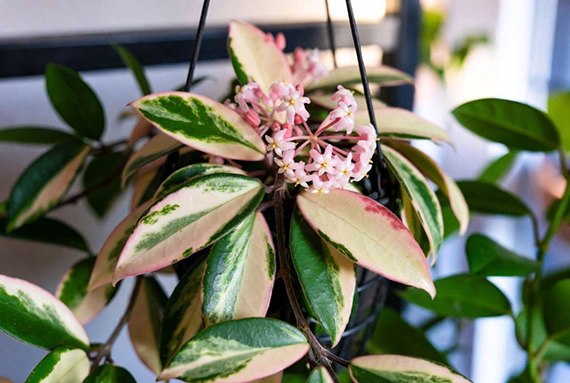
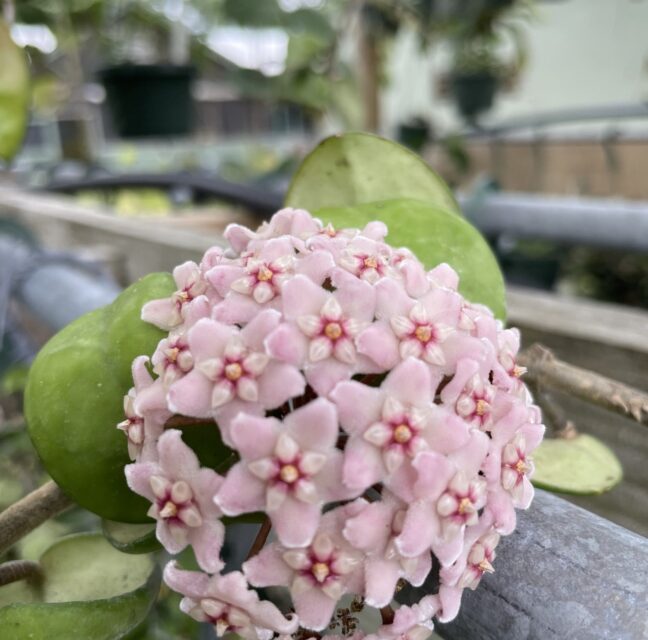
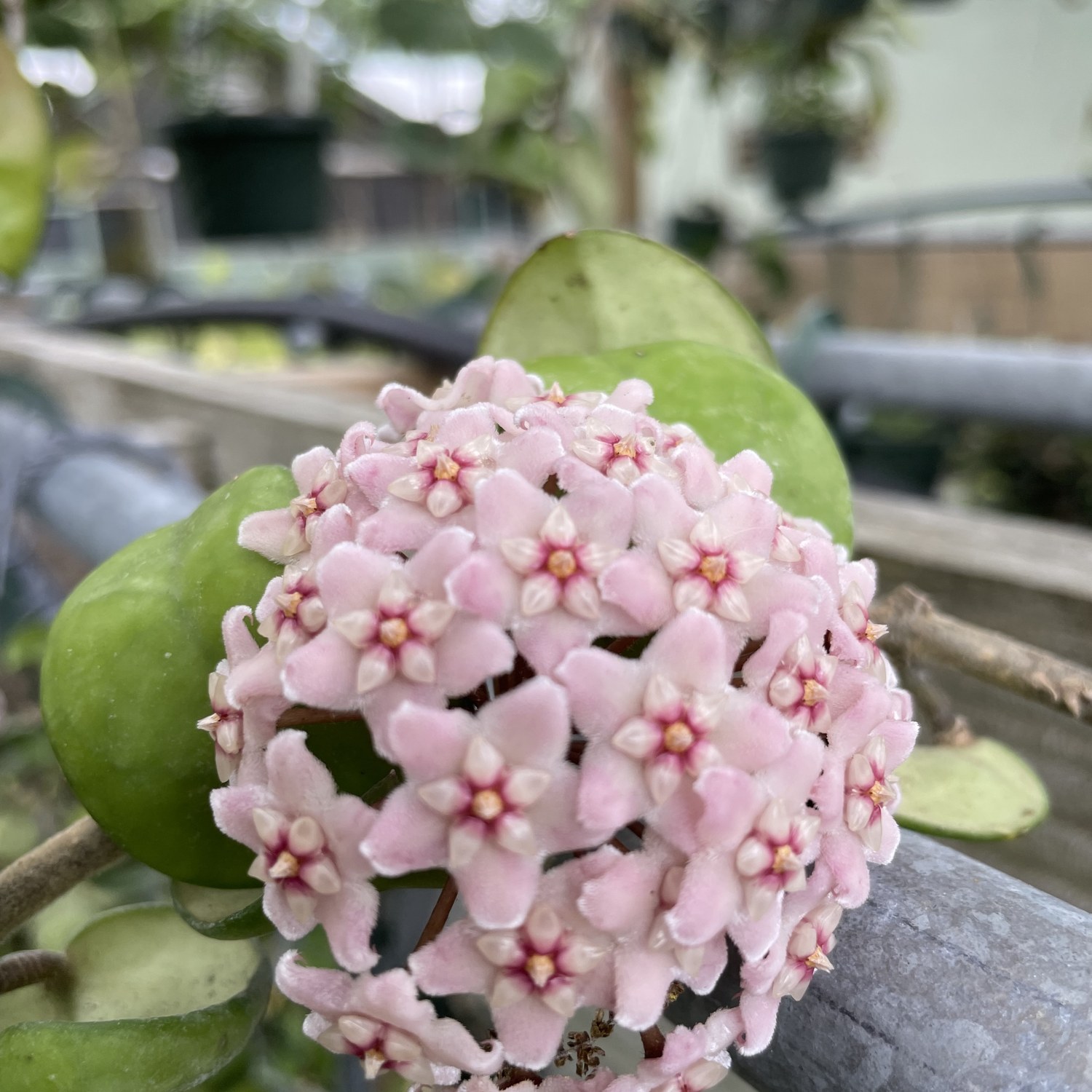
Native to Australia and the Indo-China realm, 500+ species of hoyas are available today. The Estates’ plant propagator, Janice Schmidt, has cultured an important collection and some are available for sale.
First collected in the Philippines by a Spanish botanist in the 1700s, it was not until the 1800s that the plant received its official classification, honoring English gardener and horticulturist, Thomas Hoy. An Apocynaceae, they share the same taxonomic classification as plumeria and oleander.
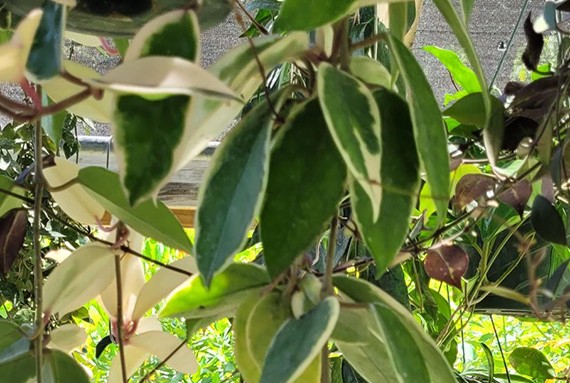
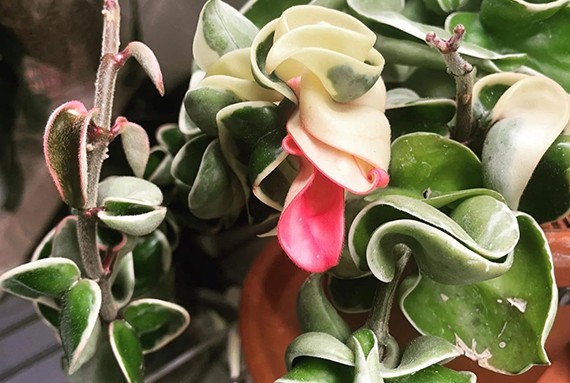
Popularly known as wax plants, Hoya carnosa is the most popular, but hoya species have been crossed countless times to produce some beautiful cultivars that range from large leaf, spotted leaves, curly leaves and of course, variegated varieties. “Carnosa” comes from the Greek for fleshy or succulent, which indeed these tropical vines are.
Hoyas can fit into most plant collections and are a wonderful choice for those who prefer easy gardening. As a vine, the plant takes well to a trellis, emulating its native growth habit of clinging to tree trunks underneath the rainforest canopy. And this is the key to growing them successfully – providing bright, indirect light; high humidity and a rapidly draining medium as the plant is able to obtain the majority of its water and nutrients through its leaves and stems.
The plant is ideal for busy gardeners who may not have the time or inclination to fuss over plants. Success with growing hoyas lies in providing their ideal conditions and then leaving them alone. Like an old man in his recliner, once settled, let them be. They enjoy being somewhat rootbound and snug in their pot, which should not be placed next to the air conditioner and keep the light bright, but always indirect or the leaves will burn.
Imagine how fast rainwater moves through a tree-mounted epiphyte; the soil of a potted hoya should allow similarly fast water movement. Ideally, two parts garden soil, one part perlite and one part orchid bark or coco coir will meet this requirement. These are one of those plants that will always prefer less water to the roots and should never be planted in standard potting soil. Any formula that holds water or includes peat will lead to a rapid decline and failure of your hoya. If possible, keeping your hoya in a terracotta pot is preferable, as the terracotta will help to wick away excess moisture.
Hoyas are very, very slow growing and do well in a hanging basket where they can enjoy the above conditions with open air circulation. As a tropical understory plant, temperature is another important consideration in their care. The sweet spot for most hoyas is between 60-80 degrees, with the popular H. carnosa preferring the warmer end of the thermometer. Though they won’t be happy, some can withstand temperatures as low as 50 F. Micro-climates created by larger plant collections such as those found on a lanai will raise ambient temperatures, but avoid the risk, and move your hoyas indoors on a chilly winter evening. Winter months, even in Southwest Florida, bring shorter days, lower temperatures and lower humidity factors that combine to naturally slow the metabolism of hoyas. In response, cut back on watering and feeding until the evening temperatures are regularly above 60 degrees.
Succulent type plants, including thick-leafed hoyas are designed to sequester lots of water, meaning they can withstand periods of drought. Thinner leafed hoyas require closer monitoring of water – an inch or more of dry topsoil – especially for indoor plants, means they are ready for a good soak. Slightly wrinkled leaves are an indication that they have gone too long without a good drink and letting them get too wrinkly, will unduly stress plants. As a new hoya parent, tracking the time interval between waterings will save a lot of anguish overall, and make it easier to plan vacations and capitalize on what these plants do best – being left alone.
Dusting them, yes – sorry, but dusting leaves upper and lower surfaces with a cloth dampened with room temperature water and a small amount of horticulture soap helps keep those pores open and available to pull moisture from the air while also discouraging pests such as spider mites. Generally, the leaves are fairly tough, but if ripped or scared, they do not repair; one must wait for new growth which will eventually be produced from a node along the stem.
These specimen plants reward the patient grower with long-lasting umbels of flowers that are often fragrant, and many times in the evening. Beyond the flowers, hoya species are also collected for the unique leaf shapes and colors from heart shaped H. kerrii to variegated ‘Hindu Ropes’ H. carnosa ‘Compacta.’ Look for the beautiful H. carnosa ‘Krimson Queen’ or tri-colored hoya. The ‘Krimson Queen’ features variegated edges and ‘Krimson Princess’ has center leaf variegation. Hoya callistophylla is another species, native to Borneo and desired for its bold dark leaf veining. Superb fragrance is the hallmark of H. pachyclada, sometimes known as ‘Red Corona.’ Keep in mind that H. kerrii are popular Valentine’s Day plant gifts and if purchased without any stem attached, the plant will take years to develop leaves, and eventually it will– though more slowly than most gardeners care to wait.
Karen is a Certified Florida Horticulture Professional, Florida and Maine Master Gardener, Florida Master Naturalist and teaches a series of gardening classes at the Estates.